Home Spa Setup & Relaxation Ideas
There is something about a spa that feels like stepping outside of ordinary life. The warm lighting, the scent of eucalyptus or lavender drifting through the air, the quiet that wraps around you like a second skin. For years, that kind of peace seemed like something reserved for people with memberships and gift certificates. But the truth is, most of what makes a spa feel restorative has very little to do with marble floors or robes embroidered with initials.
A genuine sense of calm can be built right at home, in a bathroom you already have, with products that fit a reasonable budget and a bit of intention. This guide walks you through every layer of the process, from setting the mood and choosing the right products to putting together rituals that actually stick. Whether you have an hour on a Sunday afternoon or just twenty minutes after the kids go to bed, there is a version of this that works for your life.
1. Why Bringing the Spa Home Actually Works
Before getting into the how, it is worth understanding the why. Many people assume that spa treatments only feel good because of professional skill or expensive equipment. In reality, much of the benefit comes from the deliberate act of slowing down. When you create a dedicated space for self-care, even a modest one, your brain begins to associate that environment with rest. Over time, simply walking into that space starts to lower your heart rate and ease tension in your shoulders.
Studies on sensory environments have shown that certain combinations of light, scent, sound, and temperature reliably shift the nervous system toward a parasympathetic state, which is the relaxed, restorative mode that the body often rarely gets to enter during a busy week. You do not need a sauna or a plunge pool to access that state. You need intention, a few well-chosen elements, and the habit of showing up for yourself.
2. Choosing the Right Space
The bathroom is the obvious candidate, and for good reason. It already has water, privacy, and some degree of separation from the rest of the house. But do not limit yourself if the bathroom feels too small or too utilitarian to transform. A bedroom corner with a comfortable chair, a small table, and a few candles can serve as a facial and meditation zone. A covered outdoor porch can become a foot-soak sanctuary. The key is picking a spot that feels at least somewhat separate from your day-to-day responsibilities.
Making the Most of a Small Bathroom
Small bathrooms can feel just as luxurious as large ones with the right approach. Clutter is the enemy of relaxation, so start by clearing the countertops. Move anything you do not use daily into a cabinet or a basket stored under the sink. What remains on the counter should earn its place, either by being genuinely useful or genuinely beautiful.
A few specific changes make a significant difference in a small space:
- Replace the standard shower curtain with a white or linen-colored one. Lighter tones reflect light and make the room feel larger.
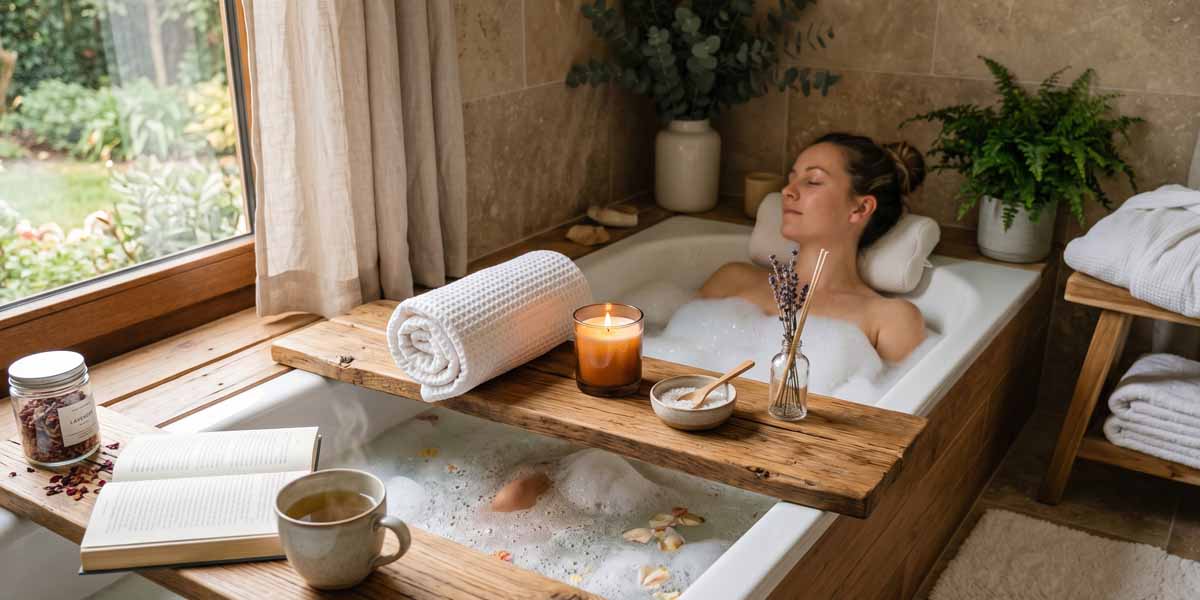
- Add a small bamboo or teak bath tray across the tub. It turns the tub into a functional station for candles, a book, and a glass of water.
- Hang a eucalyptus bundle from the showerhead. The steam releases its oils and the scent is immediately grounding.
- Use a single, good-quality Turkish cotton bath sheet instead of multiple thin towels. The texture and warmth of a well-made towel is a small luxury that adds up.
3. Setting the Mood: Lighting, Sound, and Scent
Atmosphere is doing far more work in a spa than most people realize. The treatments themselves are important, but the sensory environment is what tells your body it is safe to let go. Getting the atmosphere right at home is one of the highest-return investments you can make in your spa setup.
Lighting
Overhead fluorescent or LED lights are harsh and activating. They are designed to keep you alert, which is exactly the opposite of what you need. If you cannot replace the fixture, simply turn it off. Candles are the easiest solution, and even a few unscented tea lights transform the quality of light in a room. If you prefer something longer-lasting, a small Himalayan salt lamp gives off a warm amber glow that is remarkably soothing. Battery-operated string lights wound around a small plant or a decorative jar also work well and avoid the fire risk of candles near water.
Sound
Sound shapes the experience more than people expect. Silence works well for some people, but for others it amplifies background noise from the street or the rest of the house. A small Bluetooth speaker playing nature sounds, ambient music, or binaural beats creates an acoustic boundary that signals the brain to shift modes. Rain sounds, flowing water, and low-frequency drone music are particularly effective at promoting parasympathetic activity. Keep the volume low enough that you have to be still to hear it clearly. That constraint itself encourages you to settle in.
Scent
Scent is processed by the olfactory system, which connects directly to the limbic brain, the part responsible for emotion and memory. This is why certain smells can shift your mood almost instantly. For relaxation, lavender is the most studied and consistent performer. Bergamot and ylang-ylang are also widely used for anxiety relief. Eucalyptus and peppermint are clearing and energizing, better suited to morning spa rituals than evening wind-down sessions.
A diffuser is the most controllable way to work with scent, letting you adjust the intensity and change the blend easily. Candles with natural wax and real essential oils are a good second option. Avoid synthetic fragrance products, which often include chemicals that irritate the respiratory system and can actually increase stress rather than reduce it.
4. The Essential Products Worth Investing In
You do not need to overhaul your entire bathroom cabinet. A targeted selection of quality products will serve you far better than a drawer full of things you bought on impulse. Here is a breakdown of the categories worth prioritizing, along with what to look for in each.
Bath and Body
- Bath salts and soaks: Epsom salt, which contains magnesium sulfate, is well-regarded for muscle relaxation and stress relief. Add two cups to a warm bath along with a few drops of your preferred essential oil. Dead Sea salt provides a mineral-rich alternative that many people find beneficial for skin.
- Body scrubs: A simple sugar or salt scrub once or twice a week removes dead skin cells and improves circulation. You can buy these or make your own with one cup of sugar, half a cup of coconut oil, and ten drops of an essential oil of your choice.
- Body oils and butters: Applied right after a bath or shower, when the skin is still slightly damp, a good body oil absorbs quickly and seals in hydration. Jojoba, rosehip, and sweet almond oil are gentle options that suit most skin types.
- Dry brushing tool: A natural bristle body brush used before a shower or bath stimulates the lymphatic system, improves skin texture over time, and creates a grounding physical sensation that many people find meditative.
Face Care
- A facial steam: Fill a bowl with hot water, lean over it with a towel draped over your head, and breathe slowly for five to ten minutes. This opens pores, improves circulation, and is genuinely relaxing. Add dried chamomile, rose petals, or a few drops of essential oil for an enhanced effect.
- A clay or sheet mask: A good face mask is the quintessential home spa moment. Kaolin or bentonite clay masks work well for oily skin, while hydrating sheet masks are better suited to dry or sensitive types.
- A jade roller or gua sha tool: These simple tools help reduce puffiness, encourage lymphatic drainage, and provide a gentle massage that feels wonderful after applying a serum or facial oil. They are also easy to use and require no special training.
- A good eye mask: Stored in the refrigerator before use, cooling under-eye patches or a chilled gel mask can reduce puffiness and add an undeniable touch of luxury to the experience.
5. DIY Recipes You Can Make at Home
Some of the most effective spa treatments are also the simplest to make yourself. These recipes use ingredients that are easy to find and gentle enough for regular use.
Honey and Oat Face Mask
Mix one tablespoon of raw honey with one tablespoon of finely ground oats and a few drops of rosewater. Apply to clean skin and leave on for fifteen minutes. Oats are well-regarded for calming irritated skin, while honey provides moisture and has natural antibacterial properties. Rinse off with warm water. This works for most skin types, including sensitive skin.
Peppermint Foot Soak
Fill a basin with warm water and add half a cup of Epsom salt, a splash of apple cider vinegar, and five drops of peppermint essential oil. Soak your feet for twenty minutes. The Epsom salt eases muscle tension, the vinegar softens rough skin, and the peppermint provides a cooling, refreshing sensation that works particularly well after a long day on your feet.
Coffee Body Scrub
Combine one cup of used coffee grounds with half a cup of coconut oil and two tablespoons of brown sugar. The caffeine in coffee has a temporary tightening effect on the skin, and the gritty texture provides excellent exfoliation. Apply in circular motions in the shower and rinse thoroughly. Keep a drain cover handy, as the grounds can accumulate.
Lavender and Coconut Oil Hair Mask
Melt three tablespoons of coconut oil and mix in ten drops of lavender essential oil. Apply to dry hair from mid-shaft to ends, working a small amount into the scalp if it tends to be dry. Wrap your hair in a warm towel and leave the mask on for thirty minutes to an hour before washing out with shampoo. Coconut oil penetrates the hair shaft and reduces protein loss, while lavender promotes scalp health and smells wonderful.
6. Designing Your Spa Ritual
The difference between a nice bath and an actual spa ritual is structure. A ritual has a beginning, a middle, and an end. It signals to the body that something different is happening. Here are two sample rituals, one for an extended session and one for a shorter window of time.
The 90-Minute Full Ritual
- Begin by tidying and setting up the space. Light candles, start the diffuser, put on music. This five to ten minute preparation is part of the ritual itself, not separate from it.
- Dry brush your body for five minutes, working from feet to heart in long, sweeping strokes.
- Take a warm shower and apply a body scrub. Rinse thoroughly.
- Draw a bath with Epsom salt and essential oils. Apply your face mask and get in. Soak for twenty to thirty minutes. Read, listen to your music, or simply lie still.
- Rinse off the face mask in the last two minutes of your soak.
- Step out and apply body oil or butter while your skin is still warm and damp.
- Use your gua sha or jade roller with a facial serum or oil.
- Move to your bed or a comfortable chair. Apply eye patches, put on a sleep mask, and rest for at least fifteen minutes.
The 25-Minute Quick Reset
- Light one candle and put on music or nature sounds.
- Take a warm shower using a scrub or a beautifully scented body wash.
- Apply a sheet mask and lie down for ten minutes. Put your phone in the other room.
- Remove the mask, apply your moisturizer, and take three slow, deep breaths before returning to your day.
Both work. What matters most is the consistency, not the duration.
7. Upgrades Worth Considering Over Time
Once you have the basics in place and the habit established, there are a handful of upgrades that meaningfully elevate the home spa experience without requiring major renovation.
A Shower Steamers Collection
Shower steamers are tablets placed on the floor of your shower that dissolve in the steam and release essential oils. They are a quick way to add an aromatherapy element to a regular shower and require no additional setup.
A Towel Warmer Rack
Few things feel as genuinely luxurious as wrapping yourself in a warm towel after a bath. A plug-in towel warmer is a modest investment that pays off every single time you use it. Models that fit over existing towel bars are available, so installation is usually straightforward.
A Handheld Massager or Massage Gun
For anyone who carries tension in the neck, shoulders, or lower back, a quality handheld massager is one of the more impactful purchases for a home spa setup. Percussion massage guns have become widely available at various price points. Use it after your bath when your muscles are warm and more receptive.
A Red Light Therapy Panel
Red light therapy devices have moved from clinical settings into the home market. Research supports their use for skin health, inflammation reduction, and mood regulation. Small face-sized panels are a reasonable starting point. Used for ten to twenty minutes a few times per week, they complement other skin care practices well.
8. The Mindset Behind the Practice
A home spa setup is only as good as the commitment behind it. The products and the environment matter, but the thing that makes the biggest difference is the decision to protect that time. Many people find it helpful to schedule their spa session the same way they would a medical appointment or a work meeting, not because it requires that level of seriousness, but because it benefits from the same level of respect.
It is also worth letting go of the idea that self-care is something you have to earn. Waiting until you are exhausted or depleted to do something restorative is a bit like waiting until your car is completely out of fuel before you stop at a gas station. Regular maintenance is easier than recovery. A fifteen-minute ritual twice a week is more valuable than one elaborate session once a month followed by nothing.
Be flexible with yourself. Some weeks the 90-minute ritual happens and some weeks you light a candle in the shower and call it enough. Both are valid. The practice is a relationship, and like any relationship, it works best when you show up for it regularly rather than perfectly.
9. Seasonal Spa Ideas to Keep Things Fresh
One of the most enjoyable ways to keep your home spa practice interesting is to change it with the seasons. The body’s needs and the mind’s preferences shift throughout the year, and a spa ritual that mirrors those shifts feels natural and intuitive rather than like a fixed routine.
Spring
Focus on renewal. Incorporate brightening treatments for the skin, such as vitamin C serums and gentle exfoliation. Use lighter, citrusy scents like lemon and bergamot. Try adding fresh herbs to your bath, rose petals and mint work particularly well.
Summer
Lean into cooling rituals. A lukewarm bath rather than a hot one, chilled face masks straight from the refrigerator, and aloe vera gel applied to sun-exposed skin. Peppermint and spearmint scents feel refreshing in warm weather. A post-beach or post-outdoor-activity foot soak becomes especially satisfying.
Autumn
This is the season for warmth and depth. Spiced bath soaks with cinnamon, clove, and orange peel; heavier moisturizers as the air begins to dry out; and warming massage oils. A hot tub of water with a cup of oat milk and honey is both hydrating and deeply comforting.
Winter
Prioritize deep hydration and warmth. Rich body butters, hot herbal baths, and foot masks to address the dryness that comes with cold temperatures and indoor heating. This is also the season for longer rituals, since the early darkness and slower social calendar make it easier to carve out time. Frankincense and sandalwood scents feel grounding and appropriate for the season’s introspective quality.
10. Stocking Your Home Spa: A Practical Checklist
If you are starting from scratch, here is a practical list organized by priority. Start with the essentials and add over time.
Start Here (Essentials)
- Epsom salt (large bag)
- Two or three essential oils (lavender, bergamot, and eucalyptus cover most situations)
- A diffuser
- Unscented or lightly scented candles
- A good quality Turkish cotton towel or bath sheet
- A face mask suited to your skin type
- A Bluetooth speaker for music
Add Next (Intermediate)
- Dry brushing tool
- Body oil or butter
- Jade roller or gua sha tool
- A bath tray for the tub
- Eucalyptus bundle for the shower
- Cooling eye gel or eye patches
Over Time (Upgrades)
- Towel warmer rack
- Handheld massager
- Shower steamer collection
- Himalayan salt lamp
- Red light therapy panel
A Final Word
Creating a home spa is not about replicating the look of a five-star hotel. It is about building a practice that gives your body and mind a regular opportunity to recover. The space you create does not have to be elaborate. It has to be yours, intentional, and consistent.
Start small if you need to. One candle, one good soak, one face mask, one afternoon with your phone out of reach. Let that be enough for now. Over time, the ritual will grow into something you genuinely look forward to, not because it is obligatory, but because you have built a small pocket of your home and your schedule that exists only for restoration.
You do not need to go anywhere to feel better. You just need to build somewhere worth staying.