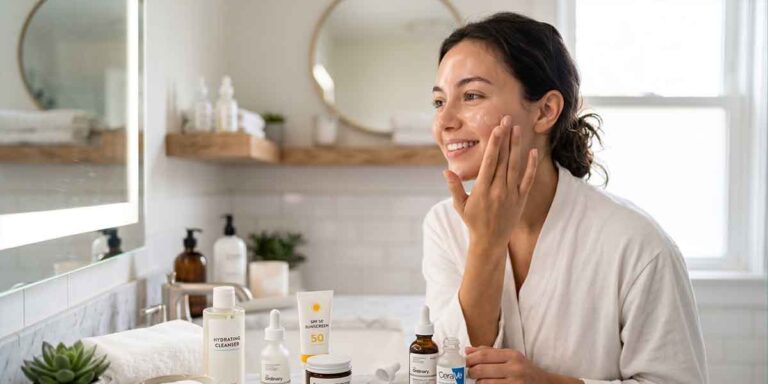
Glowing Skin Hacks & Facial Massage Tools
Everyone wants that effortless, lit-from-within glow that makes people ask, “What are you doing differently?” The truth is, achieving genuinely radiant skin does not always require expensive clinic treatments or a 15-step routine that takes up half your morning. Sometimes it comes down to knowing a few clever tricks and having the right tools in your bathroom cabinet.
This article walks you through practical, tried-and-tested skin-brightening hacks, the science behind facial massage, and an honest look at the tools worth investing in. Whether you are a complete beginner or someone who already has a solid routine but wants to take things up a notch, there is something here for you.
Why Skin Glow Fades in the First Place
Before diving into the hacks, it helps to understand what dulls skin in the first place. Radiance comes from how well your skin reflects light, and that depends on a few key factors: the rate at which dead skin cells shed, how hydrated your skin is, blood circulation beneath the surface, and the overall health of your skin barrier.
When any of these go off track, skin can look flat, tired, or uneven. Stress, poor sleep, dehydration, sun exposure, and pollution all take their toll. The good news is that most of these are reversible with the right habits and tools.
Glowing Skin Hacks That Actually Work
1. Double Cleansing Done Right
Double cleansing became popular for a reason. Starting with an oil-based cleanser to break down sunscreen, makeup, and excess sebum, then following up with a water-based cleanser to clear out pores properly, gives your skin a genuinely clean canvas. Many people who complain their serums and moisturizers are not working are simply not removing the barrier of grime that is blocking them from absorbing.
A gentle massage while cleansing with an oil cleanser is itself a small circulation booster. Spend 60 seconds working it into your skin rather than rushing through the step.
2. Exfoliate Smarter, Not Harder
Physical scrubs with large, uneven particles can create micro-tears in skin, which is the last thing you want if you are chasing glow. Chemical exfoliants, namely AHAs like glycolic acid and lactic acid, dissolve the bonds between dead skin cells rather than physically scratching them away. The result is a smoother, brighter surface without the irritation.
For beginners, lactic acid is a gentler starting point than glycolic. A leave-on toner or serum with around 5 to 10 percent lactic acid used two to three times a week can make a noticeable difference within a few weeks. Just remember to apply SPF in the morning, because exfoliated skin is more sensitive to the sun.
3. Ice Rolling for Instant Radiance
Running an ice cube or an ice roller across your face first thing in the morning is one of the simplest glow hacks that costs next to nothing. The cold constricts blood vessels temporarily, which reduces puffiness almost immediately. It also wakes up circulation so that when the vessels dilate again after a few minutes, fresh, oxygenated blood floods back to the surface.
Wrap an ice cube in a clean cloth and sweep it across your face and neck for 30 to 60 seconds. Your skin will look tighter and more awake before you have even applied a single product.
4. Layer Products in the Right Order
This sounds obvious but it catches a lot of people out. The general rule is to go from thinnest to thickest texture: toner, essence, serum, moisturizer, oil, then SPF in the morning. Applying a heavy moisturizer before a serum means the serum cannot penetrate effectively. The molecules simply cannot push through a thick occlusive layer.
If you are using a vitamin C serum, morning is the best time for it because it provides antioxidant protection throughout the day. Retinol and most exfoliating acids are better saved for night, when your skin goes into repair mode.
5. Stay Hydrated From the Inside Out
Topical hyaluronic acid serums are wonderful, but they cannot fully compensate for chronic dehydration. Your skin is an organ, and like every other organ, it needs water to function properly. Dull, crepe-like skin is often simply dehydrated skin. Aim for at least two litres of water daily and pay attention to electrolyte balance too, since plain water alone does not always hydrate cells as efficiently.
Foods with high water content, like cucumber, watermelon, and leafy greens, also contribute. So does reducing alcohol and caffeine consumption, both of which dehydrate from the inside and show on your skin fairly quickly.
6. The Slugging Technique
Slugging involves applying a thin layer of an occlusive product, most commonly petroleum jelly or a similar balm, as the very last step of your evening routine. It acts like cling film over your skin, preventing transepidermal water loss while you sleep. You wake up with noticeably plumper, softer skin.
It sounds counterintuitive for those who worry about blocked pores, but petroleum jelly molecules are too large to enter pores. It is not for everyone, particularly those with very oily or acne-prone skin, but for those with dry or combination skin, it can be genuinely transformative.
7. Sleep on a Silk or Satin Pillowcase
Cotton pillowcases create friction as you move around in your sleep, which can tug at the skin and contribute to creasing over time. They also absorb moisture and product from your face. Silk and satin pillowcases are gentler, allowing your skin to glide rather than pull. They also keep overnight treatments on your face rather than soaking them into the fabric.
The Science Behind Facial Massage
Facial massage has been part of beauty rituals across cultures for centuries, from the Gua Sha techniques of traditional Chinese medicine to the sophisticated face manipulation practices in Japanese skin care traditions. While some of the more extravagant claims circulating online need to be taken with a pinch of salt, there is legitimate science backing several of its benefits.
Improved Circulation
Massage stimulates blood flow to the face, which delivers oxygen and nutrients to skin cells and carries away waste products. Better circulation is one of the most direct routes to that healthy flush that reads as glow. You can actually see this happen in real time: after a good massage, skin has a visible warmth and rosiness to it.
Lymphatic Drainage
The lymphatic system is responsible for removing fluid and waste from tissues, but it has no pump of its own, unlike the cardiovascular system which has the heart. It depends on movement and pressure to flow. Gentle facial massage supports lymphatic drainage, which reduces puffiness, particularly around the eyes and jawline. Morning face puffiness, which many people chalk up to poor sleep, often responds well to a few minutes of lymphatic massage.
Muscle Tension and Skin Appearance
Most people carry tension in their face without realising it. The jaw, the forehead, the space between the brows, even the muscles around the eyes tend to hold stress. Chronically tense facial muscles can contribute to the formation of lines over time and can make skin look drawn or tired. Working through that tension with massage can visibly soften the face.
Better Product Absorption
Massaging a serum or moisturizer in rather than simply patting it on can enhance penetration into the upper layers of skin. The warmth generated by massage and the gentle manipulation of tissue may help active ingredients work more effectively. This is why applying a serum with a few minutes of massage often yields better results than a quick once-over.
Facial Massage Tools: What They Are and What They Do
Jade Roller
Jade rollers are probably the most recognisable facial tool of the past decade. They consist of a handle with a roller at each end, one larger for the cheeks and forehead and one smaller for the under-eye area and nose. When used consistently, jade rollers can help reduce puffiness, encourage lymphatic flow, and make applying serums more pleasant and effective.
For best results, store your jade roller in the fridge before use. The coolness adds an extra de-puffing effect. Roll gently outward and upward from the centre of the face, always moving in one direction rather than back and forth. Use it on freshly cleansed skin with a serum or facial oil to reduce drag.
A note on authenticity: the market is flooded with cheap imitations made from dyed glass or plastic. While those can still be useful tools, they are not the same as genuine jade. If authenticity matters to you, buy from a reputable source and expect to pay a reasonable price for real stone.
Gua Sha Stone
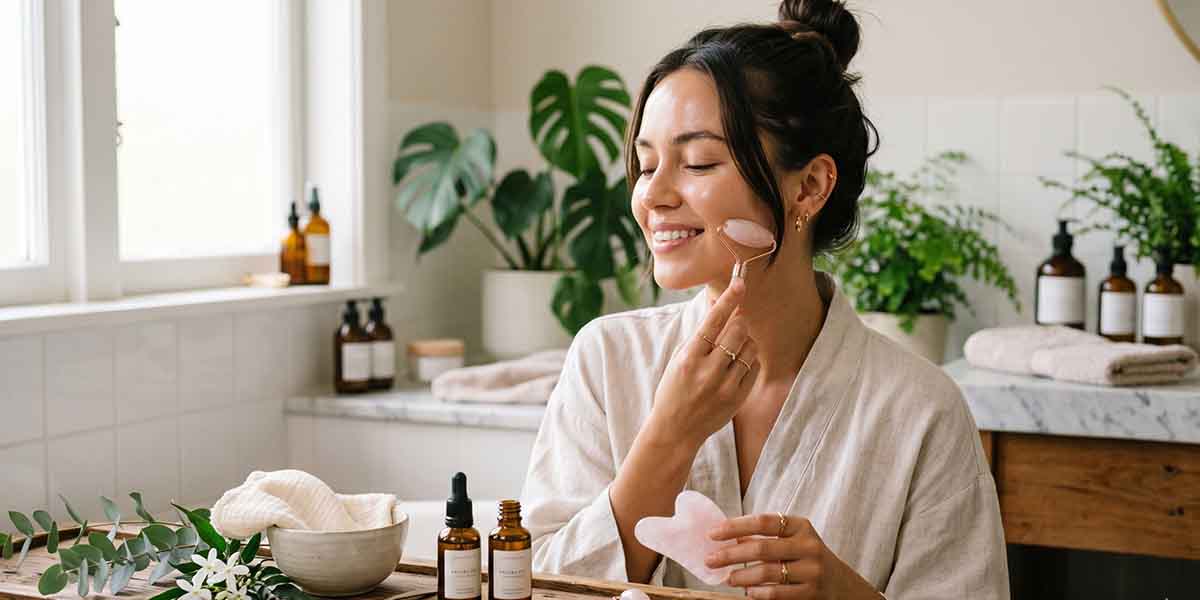
Gua Sha is an ancient healing technique that has been adapted for modern skincare. The tool itself is a flat, smooth stone with a curved edge, typically made from jade, rose quartz, or bian stone. Unlike a roller, which works in a rolling motion, Gua Sha involves longer, more deliberate strokes held at a specific angle against the skin.
The technique is particularly effective for sculpting and defining the face. Regular use along the jawline, cheekbones, and neck can visibly lift and contour the appearance of the face, not by changing structure, but by releasing muscle tension and improving circulation and drainage. Many people who switch from a jade roller to Gua Sha find it more effective because the scraping motion creates more friction and deeper tissue stimulation.
The technique requires a little practice. Hold the stone nearly flat against the skin at roughly a 15-degree angle and use medium pressure. Too light and you will not get much benefit; too heavy and you risk bruising or irritation. A facial oil is essential to prevent dragging.
Rose Quartz Roller
Rose quartz rollers work on the same principle as jade rollers but are said to stay naturally cooler for longer because of the stone’s density. Whether or not you believe in the crystal energy properties some attribute to rose quartz, the physical tool functions well. It is a solid option for those who want the rolling massage experience in a pretty package.
Facial Cupping
Facial cupping uses small silicone cups to create gentle suction on the skin, drawing the tissue upward. This is different from traditional body cupping in that the cups are kept moving rather than left in place, which prevents the bruising that stationary cups can cause. The suction encourages circulation and helps loosen tightness in the connective tissue.
Facial cupping kits are inexpensive and easy to use at home. Start with very light suction and move the cups slowly in upward and outward motions. It is particularly popular for the jawline and neck. As with all facial tools, oil is essential to protect the skin from dragging.
Microcurrent Devices
Microcurrent devices deliver low-level electrical currents that mimic the body’s natural bioelectrical signals. In professional settings, microcurrent facials are known as the “lunchtime facelift” because they temporarily firm and lift the face by stimulating the underlying muscles. At-home versions like the NuFACE have made this technology accessible to everyday users.
The results are not as dramatic as professional treatments, but with consistent daily use over several weeks, many people notice a genuine improvement in facial tone and definition. It is one of the more investment-worthy tools in the at-home skincare arsenal, though the price point is higher than stone rollers or cups.
LED Light Therapy Masks
LED therapy uses different wavelengths of light to target different skin concerns. Red light penetrates deeper to stimulate collagen production and reduce inflammation. Blue light targets acne-causing bacteria on the surface. Near-infrared light goes even deeper to support cell repair. Full-face LED masks allow you to treat the entire face at once during a 10 to 20-minute session.
Dermatologist-level LED devices are genuinely backed by clinical evidence. The at-home versions are less powerful but can still deliver meaningful results with consistent use. They work best as a complement to a solid skincare routine rather than a replacement for it. Look for masks with a high number of LED bulbs and multiple wavelength options for versatility.
Ice Rollers
Ice rollers are a middle ground between the ice cube hack and a jade roller. They have a gel-filled head that you keep in the freezer and roll across your face when needed. The cold stays consistent throughout the session, which makes them more practical than ice cubes wrapped in cloth.
They are excellent for reducing post-workout facial flushing, calming redness or irritation after exfoliating, de-puffing before an event, and soothing skin after sun exposure. They are also one of the most affordable facial tools available.
Ultrasonic Skin Scrubbers
These spatula-shaped devices use high-frequency vibrations to loosen congestion within pores and gently exfoliate the surface of the skin using water. They are particularly popular as an alternative to manual extractions because they clean out pores without any squeezing or pressure.
The results can be striking. When used on damp skin, the device emulsifies sebum and dead cell buildup within the pores and allows it to be wiped away. Skin feels noticeably smoother and more refined immediately after. For those prone to blackheads and congestion, this tool can become a weekly staple.
How to Build a Simple Facial Massage Routine
You do not need to use every tool or technique every day. A simple, consistent routine is far more effective than occasional elaborate rituals. Here is a basic structure that fits into a morning or evening routine without adding much time.
Step One: Cleanse
Start with clean skin and clean hands or tools. Massaging dirty skin pushes bacteria and sebum deeper. If you are doing an evening routine, do your cleanse first.
Step Two: Apply a Facial Oil or Serum
A slip product is essential for any tool-based massage. Dry skin and tools create friction and can cause micro-irritation. A rosehip oil, squalane, or any lightweight facial oil works well. A few drops are enough.
Step Three: Massage
Use your chosen tool and spend five to ten minutes working through the face. Begin at the neck, which is where the lymph nodes drain to, and work upward. Move from the centre of the face outward, toward the hairline and ears. Work under the jaw, across the cheekbones, over the forehead, and very gently under the eyes.
Step Four: Moisturise
Finish by patting on your moisturizer. Post-massage skin tends to absorb products better, so do not skip this step. In the morning, follow with SPF.
Common Mistakes to Avoid
- Pressing too hard with tools, especially Gua Sha. Pressure should feel firm but never painful.
- Using tools on inflamed, sunburned, or broken skin. Give irritated skin time to recover first.
- Forgetting to clean your tools. Bacteria and oil build up on rollers and stones quickly. Clean them after every use with a gentle soap or micellar water.
- Expecting overnight results. Most facial tools deliver cumulative benefits with consistent use over weeks. Patience is part of the process.
- Dragging tools downward. Always work upward and outward to support natural lymphatic drainage direction and avoid pulling skin down.
- Overloading your routine with too many actives before using stimulating tools. If you have just applied a strong exfoliant, skip the Gua Sha that night.
Which Tool Is Right for You?
With so many options available, it can feel overwhelming. Here is a rough guide based on your primary concern.
- Puffiness and morning bloating: Ice roller or jade roller kept in the fridge.
- Jawline definition and sculpting: Gua Sha stone.
- Congestion and enlarged pores: Ultrasonic skin scrubber.
- Loss of firmness and muscle tone: Microcurrent device.
- Dullness and uneven texture: LED mask combined with a consistent AHA routine.
- All-round relaxation and glow: Gua Sha or facial cupping with a nourishing oil.
Final Thoughts
The road to glowing skin does not have to be complicated or expensive. A handful of smart habits, a good understanding of what your skin actually needs, and a couple of well-chosen tools can genuinely transform your complexion over time. The key is consistency. A jade roller used three times a week for six months will do more for you than every tool on this list used once and forgotten about.
Pay attention to how your skin responds. Every person’s skin is different, and what works brilliantly for one person may not suit another. Keep notes if you find that helpful. Introduce new tools and products one at a time so you can actually tell what is making a difference.
Most of all, enjoy the process. Taking five or ten minutes each day to care for your skin is not vanity. It is a form of self-care that has real, measurable effects on how you feel as much as how you look. When you give your skin the attention it deserves, it tends to show it.