Kitchen Organization Ideas & Storage Hacks
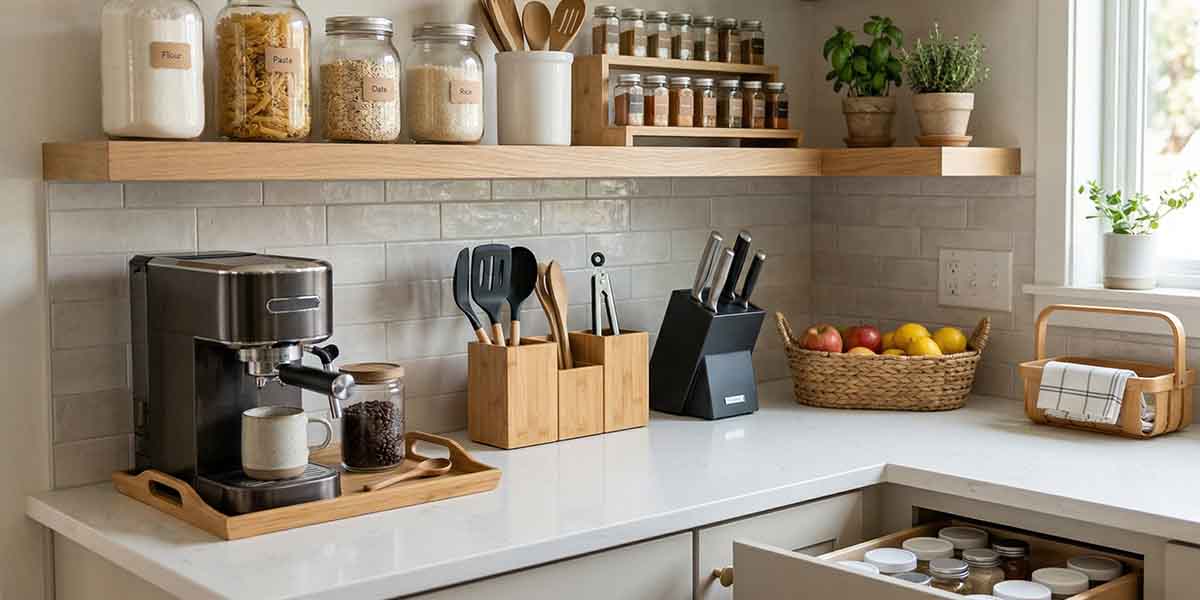
Walk into any home goods store these days, and you’ll notice something has changed. The kitchen section, once a maze of gadgets and single-use appliances, now has an entirely new category commanding whole aisles of shelf space: organizers. Drawer dividers, pull-out cabinet shelves, lazy Susans, spice racks, pantry bins, over-the-door pocket systems — the variety seems almost endless. And people are buying them in record numbers.
This isn’t just a passing fad. The kitchen organization movement is part of a broader cultural shift in how people think about their living spaces, their purchasing habits, and yes, their mental health. What started with a few viral tidying books and some satisfying before-and-after photos on social media has turned into a multi-billion-dollar industry — and a genuine lifestyle movement.
This article takes a thorough look at kitchen organizers — what they are, why the trend exploded the way it did, which products actually make a difference, and how to approach the process without wasting money or creating more clutter in the name of fixing clutter.
Why the Kitchen Became Ground Zero for Decluttering
There’s a reason the kitchen is almost always the first room people tackle when they catch the organizing bug. It’s the most-used room in the home, typically the most chaotic, and the one where disorder has the most immediate, daily impact on your quality of life.
Think about the average American kitchen. You’ve got pots and pans stuffed into cabinets at odd angles. A junk drawer that has absorbed everything from batteries to takeout menus to mystery screws. Spices crammed onto a single shelf with no discernible system. Plastic bags multiplying in a cabinet. Reusable containers with no matching lids. A countertop loaded with appliances that get used twice a year.
Studies on household stress consistently point to kitchen disorder as one of the top contributors to daily frustration. People don’t always connect the dots — they just know they feel vaguely annoyed every time they cook dinner, and they’re not sure why. Often, it’s because they spent four minutes hunting for the right lid, knocked over three things reaching for a pan, and couldn’t find the cumin even though they know they bought it.
The kitchen is also a room where better organization has an immediate, tangible payoff. You cook a meal with less friction. You find things faster. You waste less food because you can actually see what’s in the refrigerator and pantry. The feedback loop is quick and satisfying, which makes the kitchen the perfect starting point for anyone getting into the decluttering mindset.
The Cultural Moment That Made Organizing a Movement
To understand why kitchen organizers became such a phenomenon, you have to trace the thread back a bit. Marie Kondo’s book “The Life-Changing Magic of Tidying Up” landed in the United States around 2014 and became a genuine cultural touchstone. Her approach — keeping only what “sparks joy” and treating your possessions with intention — resonated with people who felt overwhelmed by the sheer volume of stuff they’d accumulated.
Then came Instagram. The platform turned home organization into something visual and aspirational. Accounts dedicated to perfectly arranged pantries and color-coded spice collections racked up hundreds of thousands of followers. The hashtag #pantryorganization and its variations gathered millions of posts. People began sharing their before-and-after photos not just as home improvement content but almost as personal triumph stories.
Then the pandemic happened. Stuck at home for months, people became acutely aware of their living environments in ways they hadn’t been before. They cooked more, which meant spending more time in the kitchen. They were home to see the chaos every day. And they had time — something people rarely had before — to actually do something about it.
Sales of storage and organization products surged during 2020 and have remained elevated since. The Container Store reported record revenue. Amazon’s home organization categories saw explosive growth. And a new generation of organizing-focused companies and influencers emerged, turning the whole enterprise into a booming cottage industry.
The Core Categories of Kitchen Organizers
The kitchen organizer market has expanded well beyond basic shelf risers and drawer dividers. Here’s a breakdown of the main categories and what each one is actually designed to solve.
Drawer Organizers
The drawer is where kitchen chaos often begins and ends. Utensil drawers become dumping grounds, junk drawers absorb everything without a home, and even dedicated tool drawers can quickly become impossible to navigate.
Drawer organizers come in two main varieties: fixed-grid trays, which come in set sizes and compartment configurations, and expandable or modular dividers, which can be adjusted to fit different drawer dimensions and customized based on what you need to store. Expandable options have become increasingly popular because kitchens vary so much in their cabinet and drawer dimensions.
Bamboo and wood organizers give a warmer, more natural aesthetic. Plastic and acrylic are easier to clean and more durable for heavy-use drawers. Stainless steel holds up well but tends to be pricier. The right material mostly comes down to personal preference and how rough the drawer gets.
Cabinet and Shelf Organizers
Cabinet space is precious, and most kitchens waste a significant portion of it simply because shelves are fixed and items don’t stack in ways that use vertical space efficiently. Cabinet organizers are designed to fix this.
Shelf risers sit inside cabinets and create a second level, effectively doubling the usable storage. Pull-out shelves — which mount inside cabinets and slide out like a drawer — are a game-changer for deep cabinets where things get lost at the back. Door-mounted racks use the interior surface of cabinet doors, adding storage in a spot most people ignore entirely.
Lazy Susans (rotating trays) are particularly useful for corner cabinets, which are notoriously difficult to use efficiently. A two-tier rotating tray in a corner cabinet can transform what was previously an inaccessible black hole into genuinely useful storage.
Pantry Organization Systems
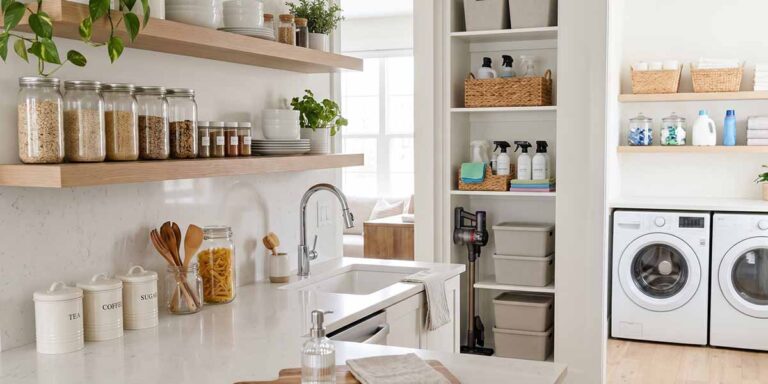
The pantry is where most of the Instagram-worthy organization photos come from, and for good reason. A well-organized pantry is deeply satisfying to look at and far more functional than a random pile of boxes and bags.
Airtight containers for dry goods — rice, pasta, cereal, flour, sugar — are the cornerstone of pantry organization. They extend shelf life, keep pests out, and allow you to see at a glance how much of something you have left. Clear containers are preferred by most organizers because visibility is key to actually using what you store.
Open bins and baskets group similar items together — snacks in one basket, baking supplies in another, canned goods in a third. Pull-out drawer inserts for canned goods allow tins to be stored on their sides and rolled forward as they’re used, a first-in-first-out system that reduces waste. Over-door pantry organizers add pockets for packets, small bottles, and flat items.
Refrigerator and Freezer Organizers
Refrigerators are notoriously difficult to keep organized because their default shelving rarely matches how people actually shop and cook. Clear storage bins that fit inside the fridge create designated zones — deli items, drinks, leftovers, snacks — and make it far easier to see what’s there before things expire and get forgotten.
Egg holders, lazy Susans designed for fridge shelves, can organizers, and produce bins designed to reduce moisture buildup all contribute to a more functional refrigerator. The freezer is often treated as a secondary concern, but freezer organizers — stackable bins and dividers — can make an enormous difference in how much space is actually usable and how easy it is to find things buried at the bottom.
Countertop and Vertical Space Solutions
Countertop real estate is among the most contested space in any kitchen. People love having appliances accessible but hate losing counter space. The solution isn’t always to clear everything off — sometimes it’s to use the vertical dimension more thoughtfully.
Wall-mounted magnetic knife strips free up counter space taken by knife blocks. Pegboards mounted on kitchen walls can hold pots, pans, utensils, and spice jars, turning an empty wall into a functional storage solution. Tiered countertop shelves or small open shelving units allow items to be stacked without stacking in the literal, cluttered sense.
Under-cabinet hooks for mugs, hooks on the inside of cabinet doors for pot lids, and tension rods used vertically inside cabinets to hold cutting boards and sheet pans upright are all small solutions that add up to significant space savings.
The Psychology Behind the Organizing Obsession
The appeal of organization goes beyond simple practicality. Psychologists have spent considerable time studying why people feel so drawn to the act of decluttering and organizing, and the findings are pretty consistent: a cleaner, more organized environment reduces anxiety and increases feelings of control.
Visual clutter competes for your attention even when you’re not consciously aware of it. Every item in view is, in a very minor way, demanding some processing from your brain — reminding you it needs to be put away, that a task is unfinished, or simply creating low-level noise in your visual field. A tidy kitchen, by contrast, signals that things are in order. It’s a cue to your nervous system that you have a handle on your environment.
There’s also something deeply satisfying about creating systems. When you design a pantry with labeled containers and designated zones, you’re creating order out of chaos. That’s a cognitively rewarding experience. It’s not unlike solving a puzzle. And unlike most puzzles, this one stays solved — at least until the next grocery run.
There’s a well-documented phenomenon sometimes called the “fresh start effect,” in which people are more motivated to make changes when they associate an action with a new beginning — a new year, a new home, a new season. Organizing fits this framework naturally. People tackle the kitchen after moving, after a stressful period, after finally getting fed up, or at the start of the year. The act of organizing becomes a symbolic reset, not just a practical one.
Common Mistakes People Make When Organizing
The kitchen organizing space is full of enthusiasm and good intentions, but also a fair number of traps that send people back to square one. Here are the mistakes that come up again and again.
- Buying organizers before decluttering. This is the single biggest mistake. If you bring in bins and baskets before deciding what to keep, you end up organizing clutter rather than eliminating it. The first step always has to be going through what you own, getting rid of what you don’t need or use, and only then figuring out what containers and systems you need.
- Optimizing for looks over function. Perfectly uniform, labeled containers look gorgeous in photos. But if you don’t actually cook in a way that matches the system — if you never take the time to transfer cereal into a canister or refill a spice jar — the system collapses within a few weeks. The best organizing system is one you’ll actually maintain.
- Ignoring how you actually use the kitchen. Organization solutions need to fit your habits, not someone else’s. If you bake constantly, your baking supplies need to be accessible. If you rarely cook and mostly reheat, the setup should reflect that. Copying someone else’s system wholesale rarely works because you cook differently and have different stuff.
- Not measuring before buying. Cabinet depths vary. Drawer dimensions vary. What works in one kitchen may not physically fit in another. Always measure the space before purchasing any organizer, especially pull-out shelves or cabinet inserts that need to fit within specific dimensions.
- Trying to do everything at once. Whole-kitchen overhauls are exhausting. Most people who try to organize every cabinet, drawer, and shelf in a single weekend either burn out halfway through or end up with a bigger mess than they started with. Zone-based approaches — tackling one area at a time, completing it before moving on — tend to produce more lasting results.
A Practical Approach to Getting Started
If you want to organize your kitchen and have it actually stick, the process benefits from some structure. Here’s a straightforward approach that doesn’t require a massive time commitment all at once.
Step One: Audit Everything
Before you buy a single thing, go through what you have. Pull everything out of the cabinets — really everything — and lay it on the table or counter. You’ll almost certainly find things you forgot you owned, duplicates of items, gadgets you’ve never used, and things that are broken or expired. Be honest about what you actually use. If you haven’t reached for it in a year and it doesn’t serve a purpose you can name, consider letting it go.
Step Two: Group by Category and Frequency
Once you know what you’re keeping, sort items into categories. Cooking equipment, baking supplies, dry goods, snacks, cleaning products, and so on. Then think about frequency of use. Things you reach for daily belong in the most accessible spots — eye level in the pantry, the easiest cabinet to open, the front of the drawer. Things used weekly can go a bit further back. Seasonal or rarely-used items belong in the least accessible spots or even in storage outside the kitchen.
Step Three: Map Out Your Zones
Kitchens work best when they have zones — logical areas where related items are grouped and stored near where they’ll be used. The coffee zone, with mugs, the coffee maker, and supplies, belongs near the outlet you use for coffee. Cooking tools belong near the stove. Baking items near the stand mixer or the open counter where you bake. A beverage zone near the refrigerator. Mapping this out before you put anything back helps enormously.
Step Four: Measure, Then Shop
Now you can shop. With your zones mapped and your categories established, you know what kind of organizers you actually need. Measure every space you’re planning to fill — drawers, shelf heights, cabinet depths. Write the measurements down and bring them with you, or keep them on your phone. This step alone will save you multiple return trips to the store.
Step Five: Implement One Zone at a Time
Set up one area completely before moving to the next. Live with it for a week. Notice if the system works the way you thought it would. Adjust if needed. Then move on to the next zone. This iterative approach produces systems that actually fit how you cook rather than how you imagined you’d cook when you were standing in the store staring at bins.
The Environmental Angle Worth Considering
One of the more interesting tensions in the kitchen organizing trend is the environmental one. The decluttering movement is, at its core, a critique of excess consumption — a recognition that many people have too much stuff and that accumulation isn’t making them happier. And yet the most common response to having too much stuff is to buy more stuff: organizers, containers, baskets, bins.
This isn’t lost on everyone who participates in the trend. A growing segment of the organizing community has started pushing back against the impulse to buy matching container sets and uniform labels for everything. The question worth asking is whether you actually need a new container or whether you could repurpose something you already own — a jar, a box, a basket that’s already in the house.
There’s also the material question. A lot of the cheapest organizers are made from low-grade plastic that doesn’t last particularly long. Spending a bit more on a bamboo drawer organizer or a well-made metal shelf riser often makes more sense in the long run — both financially and from a waste perspective. The goal is to buy fewer, better things, which lines up neatly with the organizing philosophy to begin with.
Donating the items you’re removing from the kitchen is another practice that more people in the organizing community are making a point of. Functional items that just don’t belong in your kitchen anymore — an extra set of glasses, a rarely-used appliance, a duplicate of something — often find eager takers at local donation centers.
Renter-Friendly Organizing Without Permanent Changes
One of the complications with kitchen organization is that many people rent, which means no drilling into walls, no permanent shelving, and no alterations to cabinets. This used to significantly limit options, but the market has responded with a large and genuinely useful range of no-damage solutions.
Command strips and adhesive hooks have improved dramatically and can now support more weight than early versions. Tension rods work without any hardware at all — they expand and hold themselves in place with spring pressure, useful for creating dividers inside cabinets or holding items on walls. Freestanding shelving units require no installation and can be reconfigured or moved when you change apartments.
Removable wallpaper and peel-and-stick tiles have become popular ways to update pantry and cabinet interiors without damaging surfaces. And most modern pull-out shelf organizers are designed to work without tools — they’re supported by the shelf below them rather than screwed into the cabinet walls.
Renters working with small kitchens have also embraced over-the-door solutions heavily — door-mounted organizers on pantry doors, on cabinet doors, even on the back of the kitchen door itself if there’s one. It’s space that almost everyone ignores by default but that can hold a surprising amount.
Budget-Conscious Organizing: You Don’t Need to Spend a Fortune
A quick scroll through organizing influencer accounts could leave you with the impression that a well-organized kitchen requires hundreds of dollars in matching acrylic containers, custom labels, and artisanal baskets. This isn’t true, and it’s worth pushing back on.
Some of the most effective organizing solutions are also among the cheapest. Dollar stores consistently stock drawer dividers, bins, and shelf risers that work perfectly well. IKEA has been a go-to source for organizing basics for decades precisely because their products are functional and affordable. Amazon’s marketplace has made it possible to find organizers at nearly every price point.
Repurposing is also an underutilized option. Glass jars from pasta sauce or jam work perfectly as containers for dry goods or utensils. Shoeboxes work as temporary organizers while you figure out what you actually need. A wooden cutting board stood upright in a cabinet with a file organizer can serve as a pan divider. The function matters more than the aesthetic, especially at the beginning.
If you do want to invest in quality organizers that will last, the best approach is to prioritize high-traffic areas. The drawer you open twenty times a day is worth investing in. The cabinet you access once a month less so. Put money where it’ll make the most daily difference.
The Bigger Picture: What Decluttering Is Really About
Kitchen organization is satisfying partly because kitchens are so central to daily life. But the deeper appeal of the decluttering trend is that it gives people a sense of agency over their environment at a time when a lot of other things feel out of control. You can’t control the news cycle or the economy or your commute, but you can decide where your spatulas go.
The best outcomes of kitchen organization aren’t really about the containers or the labels. They’re about cooking without frustration. Finding ingredients before they expire. Having a kitchen that functions as a pleasant space rather than a source of low-grade daily stress. Those are the actual goals, and any system that achieves them — whether it’s Pinterest-worthy or just quietly functional — is a success.
The trend has brought a lot of genuinely useful products to market and sparked real conversations about what we own, why we own it, and how much is actually enough. That’s not nothing. Even if you never buy a single matching container or hand-letter a single label, the underlying questions the movement raises are worth sitting with: What do I actually use? What’s here because I thought I’d need it and never did? What would it feel like to move through my kitchen without having to work around the clutter?
Those questions don’t require a shopping cart to answer. But if you do reach for the drawer dividers and the pantry bins, at least now you know what you’re really reaching for.