Gentle Yoga for Women Over 60
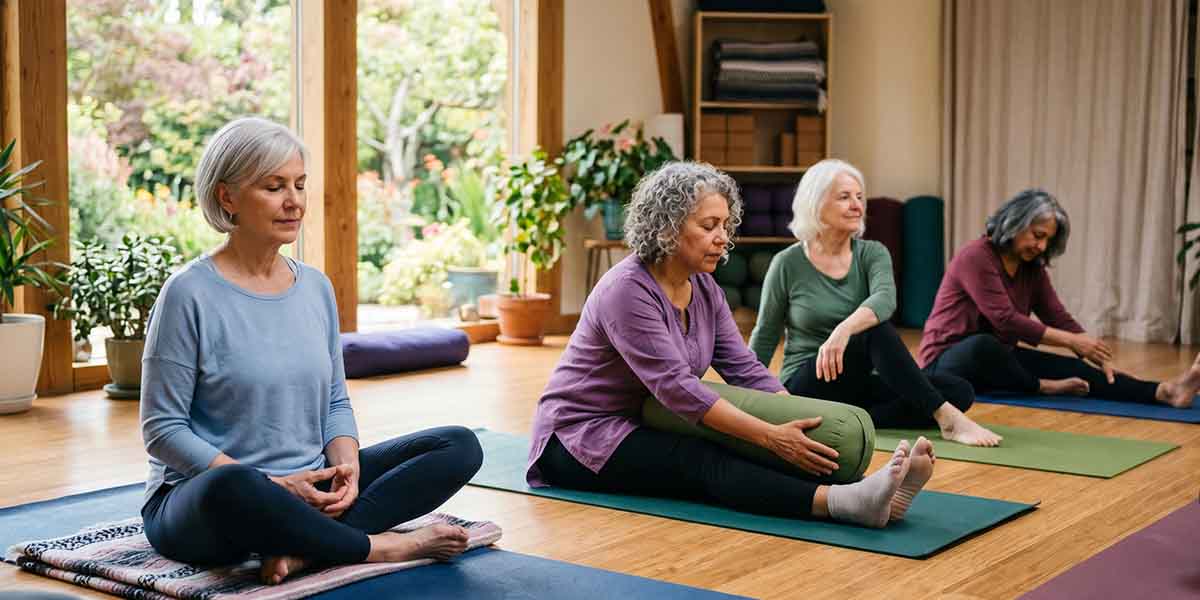
There is something quietly powerful about a woman in her sixties rolling out a yoga mat for the first time, or returning to one after years away. Life at this stage carries its own rhythm — maybe the children are grown, the career has shifted, and the body has started sending different kinds of messages. Joints that once moved without complaint now ask for a little more warming up. Sleep does not always come as easily as it once did. And the mind, more than ever, craves stillness.
Gentle yoga meets women exactly where they are. It does not demand flexibility you do not have, or strength you are still building. It asks only that you show up, breathe, and pay attention. What follows is a thorough guide to gentle yoga specifically for women over 60 — what it is, why it matters, how to get started, and which poses tend to help most.
What Gentle Yoga Actually Means
The word “gentle” can sound like a polite way of saying “easy” or “for beginners only,” but that is not quite right. Gentle yoga is a style and an attitude — one that prioritizes careful movement over performance, breath over effort, and presence over achievement. It borrows from several traditions, including Hatha yoga, restorative yoga, and chair yoga, but the defining feature is always the same: poses are held with awareness, never forced, and modified freely to suit each body.
For women over 60, this approach is not a compromise. It is, in many ways, the most intelligent form of yoga available. The goal is not to look like the woman on the magazine cover. The goal is to stay mobile, reduce pain, sleep better, manage stress, and feel at home in your own skin for decades to come.
Why Your Body Benefits So Much After 60
The decade following 60 brings real physiological changes, and gentle yoga addresses many of them directly. Understanding a few of these changes helps explain why this practice works so well at this stage of life.
Bone Density and Joint Health
After menopause, estrogen levels drop significantly, and with them goes much of the hormonal protection that kept bones dense. Osteoporosis and osteopenia become real concerns. Weight-bearing yoga poses — standing postures in particular — place gentle stress on bones in a way that encourages them to maintain their density. This is not speculation. Studies published in journals like Topics in Geriatric Rehabilitation have documented meaningful improvements in bone mineral density in older women who practiced yoga regularly.
At the same time, the cartilage in joints benefits from gentle, controlled movement. Joints are nourished by synovial fluid, and that fluid moves when you move. Sitting still for long periods actually starves the cartilage of the nutrients it needs. Gentle yoga keeps that circulation going without grinding or compressing joints in harmful ways.
Muscle Mass and Balance
Sarcopenia — the gradual loss of muscle mass that begins in the forties and accelerates after sixty — is one of the less-discussed but very significant changes in aging. It affects strength, metabolism, posture, and perhaps most critically, balance. Falls are the leading cause of injury-related death among older adults in the United States, and much of fall risk comes down to weakened muscles and impaired proprioception (the body’s sense of its own position in space).
Gentle yoga builds functional strength through bodyweight poses and teaches the nervous system to better track where the body is at any given moment. Tree pose, Warrior I, and even a simple standing forward fold all challenge balance in a controlled, safe environment.
Flexibility and Fascia
Connective tissue, including the fascia that wraps around muscles and organs, tends to stiffen with age. This is partly hydration-related and partly a result of accumulated micro-tension from years of habitual postures. Many women notice this as tightness in the hips, lower back, shoulders, or the backs of the legs.
Gentle yoga addresses fascial restriction through slow, sustained stretching that allows tissue to release gradually. Unlike ballistic stretching (bouncing into a pose), the held stretches in yoga trigger the stretch reflex to soften, allowing for deeper, safer release over time.
The Nervous System and Stress Response
Cortisol, the primary stress hormone, tends to run higher in older adults, particularly those who have faced significant life transitions — retirement, grief, health challenges, shifting family roles. Chronic elevated cortisol contributes to sleep disruption, weight gain around the midsection, immune suppression, and mood instability.
Yoga’s emphasis on slow breathing directly activates the parasympathetic nervous system — the body’s rest-and-digest mode — and brings cortisol down. Even a 20-minute practice has been shown to measurably shift physiological stress markers. Women who practice regularly often report sleeping more soundly, feeling less reactive, and handling daily challenges with greater steadiness.
Before You Begin: A Few Honest Words
If you have any significant health conditions — osteoporosis, recent surgery, cardiovascular disease, arthritis, or a history of falls — it is worth a brief conversation with your doctor before starting any new movement practice. Most gentle yoga is appropriate for most conditions, but there are specific modifications (for example, avoiding deep forward folds with severe osteoporosis, or staying out of inversions with glaucoma) that a physician or trained yoga therapist can help you navigate.
Also worth saying plainly: pain is not progress. A mild sense of stretch, warmth, or pleasant fatigue is normal and good. Sharp pain, joint discomfort, dizziness, or shortness of breath are signals to stop and check in with a professional. The yoga community sometimes glorifies pushing through discomfort, but that mindset has no place in a gentle practice.
Setting Up Your Practice Space
You do not need a studio, expensive clothing, or a collection of props to begin. What you do need is a non-slip surface (a good yoga mat is worth the investment — look for one at least 5mm thick for joint cushioning), enough floor space to lie down and stretch your arms wide, and a sturdy chair nearby for support during standing poses.
Useful props that make a real difference:
- Two yoga blocks (or thick hardcover books) — for bringing the floor closer in standing poses and providing support in seated stretches.
- A yoga strap (or a long belt or bathrobe tie) — helpful for reaching the feet in reclined stretches without straining the neck or shoulders.
- A bolster or firm pillow — excellent for restorative poses, placed under the knees or chest.
- A folded blanket — for kneeling poses, under the hips in seated positions, or as a layer of warmth during relaxation.
Wear comfortable clothing that allows free movement. Morning or early evening tends to suit most women best — mornings for the clarity and energy that carries through the day, evenings for the release of accumulated tension.
The Poses: A Gentle Full-Body Practice
The following poses form a complete gentle practice. You can do them all in sequence (about 45–60 minutes) or select from them for a shorter session. Each description includes the primary benefits and notes for those with common conditions.
Opening: Seated Breathing (2–5 Minutes)
Sit comfortably in a chair or on the floor with your back supported or gently upright. Close your eyes or soften your gaze. Simply notice your breath for a minute without changing it. Then begin to gradually lengthen each exhale — breathing in for a count of four, out for a count of six or eight.
This seemingly simple exercise shifts the nervous system before the body poses begin. It tells your system that this time is for rest and healing. Many women find this the most unexpectedly powerful part of their practice.
Cat-Cow Stretch (Marjaryasana-Bitilasana)
Begin on hands and knees, wrists under shoulders and knees under hips. On an inhale, let the belly drop, lift the chest and tailbone upward (Cow). On an exhale, press into the hands, round the spine toward the ceiling and tuck the chin and tailbone (Cat). Move slowly between the two for 8–10 breaths.
Benefits: Warms the entire spine, hydrates the spinal discs, improves coordination between breath and movement. Particularly good for lower back stiffness. Modification for wrist discomfort: make fists instead of flat palms, or perform the same movement seated in a chair with hands on knees.
Child’s Pose (Balasana)
From hands and knees, sit back toward your heels (a bolster between thighs and calves is helpful if the knees are tight), extend the arms forward or rest them alongside your body, and let the forehead rest on the mat or a folded blanket. Hold for 5–10 slow breaths.
Benefits: Releases tension in the lower back, hips, and thighs; gently stretches the ankles; calms the nervous system. A natural resting pose you can return to at any point in the practice. Skip this pose if you have severe knee pain — seated forward fold is a good alternative.
Mountain Pose (Tadasana)
Stand with feet hip-width apart, arms relaxed at your sides or resting on the back of a chair for support. Feel the four corners of each foot pressing evenly into the floor. Gently lift through the crown of the head, let the shoulders roll back and down, and breathe fully. Hold for 5 breaths.
Benefits: Trains postural awareness, activates the core and legs, and establishes the body’s neutral alignment. It may look like “just standing,” but women often discover they have been habitually holding tension in the shoulders, jutting the chin forward, or locking the knees. Mountain pose corrects all of this.
Tree Pose (Vrksasana)
From Mountain pose, shift your weight onto the left foot and place the sole of your right foot on your inner left ankle, calf, or thigh (never directly on the knee). Rest one hand on a wall or chair back for support. Hold for 5 breaths, then switch sides.
Benefits: Builds single-leg balance, strengthens the ankles and standing leg, sharpens proprioception. Research consistently shows balance training like Tree pose significantly reduces fall risk. Do not worry if you wobble — wobbling is the balance challenge working.
Warrior I (Virabhadrasana I)
Step the right foot forward about 3 feet, with the back left heel pressed down and turned out slightly. Bend the front knee to 90 degrees (or as comfortable), keeping it above the ankle. Raise both arms alongside the ears or rest hands on hips if the shoulders are tight. Hold for 5 breaths, then switch sides.
Benefits: Strengthens the legs and glutes, opens the hip flexors (often tight from prolonged sitting), improves hip stability. Use a chair nearby for support when learning. Women with knee replacements should keep the bend shallow and monitor for any discomfort.
Standing Forward Fold (Uttanasana)
Stand with feet hip-width apart. On an exhale, hinge forward from the hips (not the waist) and let the torso hang. Bend the knees generously — this is not a flexibility contest. Let the head and neck fully release. You can hold opposite elbows and sway gently. Hold for 5–8 breaths, then roll up slowly one vertebra at a time.
Benefits: Releases the entire posterior chain (lower back, hamstrings, calves), reverses spinal compression from sitting, promotes blood flow to the head which many find calming. Note for severe osteoporosis: a gentler alternative is to stand facing the back of a chair and hinge forward with a flat back rather than a full rounded fold.
Seated Forward Fold (Paschimottanasana)
Sit on the floor with legs extended in front of you (sit on a folded blanket if the hips are tight). On an inhale, lengthen the spine tall. On an exhale, hinge forward from the hips and reach toward the shins, ankles, or feet — wherever is comfortable without forcing. A strap around the soles of the feet makes this pose much more accessible. Hold for 5–10 breaths.
Benefits: Deeply stretches the hamstrings and lower back, massages the abdominal organs, calms the mind. This is one of the best poses for women who spend long hours sitting.
Reclined Pigeon (Supta Kapotasana)
Lie on your back with both knees bent and feet flat on the floor. Cross the right ankle over the left knee, flexing the right foot. Either stay here or draw the left knee toward your chest, threading the right hand through the gap between the legs to clasp behind or in front of the left thigh. Hold for 8–10 breaths, then switch sides.
Benefits: Releases the piriformis and outer hip — muscles that frequently cause or contribute to sciatica and lower back pain. This is the safest and most accessible hip opener for most women, particularly those with knee sensitivities who cannot manage seated pigeon.
Bridge Pose (Setu Bandha Sarvangasana)
Lie on your back with knees bent, feet flat, and hip-width apart. Press the feet into the floor and slowly peel the hips off the mat, lifting one vertebra at a time. Option to clasp the hands beneath the hips for a deeper chest opener. Hold for 5 breaths, then slowly lower.
Benefits: Strengthens the glutes, hamstrings, and lower back — all of which tend to weaken with age and contribute to back pain when weak. Also opens the chest and throat, counteracting the forward-rounding posture that many women develop over time. A wonderful pose for bone health in the hips and spine.
Legs Up the Wall (Viparita Karani)
Sit sideways next to a wall and swing your legs up as you lie back, so that your legs rest vertically against the wall and your torso rests on the floor. Place a folded blanket under the hips if the lower back feels strained. Rest your arms to the sides, palms up. Stay for 5–15 minutes.
Benefits: This is one of yoga’s great gifts to older women. It drains fluid from swollen feet and ankles, calms the nervous system profoundly, relieves tired legs, and gently decompresses the lower back. Many women find it the most restorative thing they can do for their bodies at the end of the day. Avoid if you have glaucoma or severe acid reflux.
Closing: Corpse Pose (Savasana)
Lie flat on your back, arms a few inches from your sides with palms facing up, legs slightly apart. Close your eyes and let everything rest. Stay for 5–10 minutes. This is not sleeping — it is conscious rest, the integration of everything the body has done.
Many women are tempted to skip Savasana because it “does not feel like exercise.” Please don’t. The nervous system integration that happens in these final minutes is when much of the benefit of the practice is absorbed. It is not optional — it is the point.
Chair Yoga: When Getting to the Floor Is a Challenge
For women with significant arthritis, recent hip or knee replacement, balance concerns, or those who simply find floor work uncomfortable, chair yoga offers a complete practice without ever needing to get down. Almost every pose described above has a chair adaptation, and an entire practice can be done seated or using the chair for support.
Chair yoga is not a lesser version of “real” yoga. It is yoga, adapted intelligently. The breath, the awareness, the strength and flexibility work — all of it translates. Many senior yoga teachers consider chair yoga one of the most sophisticated forms of the practice because it demands more creativity and attention from the practitioner.
Building a Sustainable Routine
The question of how often to practice has a simple answer: consistently and with enjoyment. Three sessions per week of 30–45 minutes produces noticeable benefits within four to six weeks. Daily practice, even 15–20 minutes, tends to produce faster change and builds the habit more easily.
Resist the temptation to practice through fatigue or illness. Yoga is not training for a competition. Rest days are part of the practice. Many women find that doing a shorter, gentler version on low-energy days — perhaps just the breathing exercise and Legs Up the Wall — keeps the habit alive without depleting reserves.
A few practical suggestions for building the habit:
- Keep your mat out in plain sight rather than rolled up in a closet. The visual reminder makes starting enormously easier.
- Practice at the same time each day to anchor the habit to an existing routine — before breakfast, after the morning news, or before dinner.
- Find a class, whether in person or online, with an instructor whose voice and pace you enjoy. Guided practice sustains motivation far better than self-directed practice for most beginners.
- Keep a brief journal of how you feel before and after practice. After a few weeks, this record becomes powerful evidence of what you are gaining — better sleep, less stiffness, calmer mornings — and that evidence keeps you coming back.
- Practice with a friend when possible. The social dimension of yoga is underrated.
What to Look for in a Teacher or Class
Not all yoga teachers are trained to work with older adults. When evaluating a class or instructor, look for these indicators:
- Training specifically in yoga for seniors, therapeutic yoga, or yoga therapy (IAYT certification is the gold standard).
- A class that explicitly offers modifications for every pose, rather than treating modification as an afterthought.
- A teacher who walks through the room during class and offers hands-on adjustments (with consent) or verbal cues for individual students.
- A pace that feels unhurried. If you are constantly rushing to keep up with transitions, the class is too fast.
- A community atmosphere rather than a performance atmosphere.
Online options have expanded enormously, and many women over 60 find them ideal — no driving, no scheduling pressure, and the ability to pause and rewind. Platforms like Yoga with Adriene on YouTube offer accessible free content. Apps such as Glo, YogaGlo, and DoYogaWithMe include senior-specific content.
Common Questions and Honest Answers
“I’m not flexible at all. Is yoga still for me?”
Completely. Yoga is not a flexibility test that you pass or fail. Inflexibility is exactly the condition yoga is designed to address. The practice meets you where you are and gradually opens things up over time. After three months of consistent gentle yoga, most women are amazed by the changes in their range of motion.
“I have osteoporosis. Are there poses I should avoid?”
Yes, with significant osteoporosis it is wise to avoid deep spinal flexion (rounding forward aggressively), deep spinal twists that load the vertebrae, and unsupported inversions. However, most of the gentle poses described in this article are appropriate and beneficial. Work with a yoga therapist or physiotherapist who understands osteoporosis if you have it.
“How is yoga different from stretching?”
Stretching typically addresses specific muscles in isolation. Yoga integrates breath, alignment, mental focus, and whole-body movement. The breath component alone makes yoga fundamentally different from a post-exercise stretch routine. It also builds strength alongside flexibility, whereas static stretching alone does not.
“Can yoga replace other forms of exercise?”
For many aspects of health — flexibility, balance, stress reduction, gentle strength — yes, yoga can be the centerpiece. For cardiovascular fitness and significant bone-loading work, most women over 60 benefit from combining yoga with walking, swimming, or light resistance training. Yoga and moderate cardio complement each other beautifully.
The Bigger Picture: Yoga as a Way of Living
Women who stick with gentle yoga long enough tend to notice something unexpected: the practice starts to change more than their bodies. They find themselves more patient with difficult family members. They handle medical appointments with less anxiety. They sleep more deeply. They notice beauty in ordinary things with more frequency.
This is not magic. It is the accumulated effect of spending regular time in stillness, paying close attention to the body, and practicing the art of letting things be as they are. Yoga’s real gift to older women is not a more flexible spine, though that is welcome. It is a more spacious way of moving through the world.
At sixty, seventy, eighty, and beyond, the body is still capable of adaptation, learning, and surprise. Every woman who starts a gentle yoga practice discovers this. The mat becomes a reliable place where the noise of the world quiets down and the body’s own intelligence gets to speak. That is worth showing up for.