Deep Sleep Routine & Night Relaxation Hacks
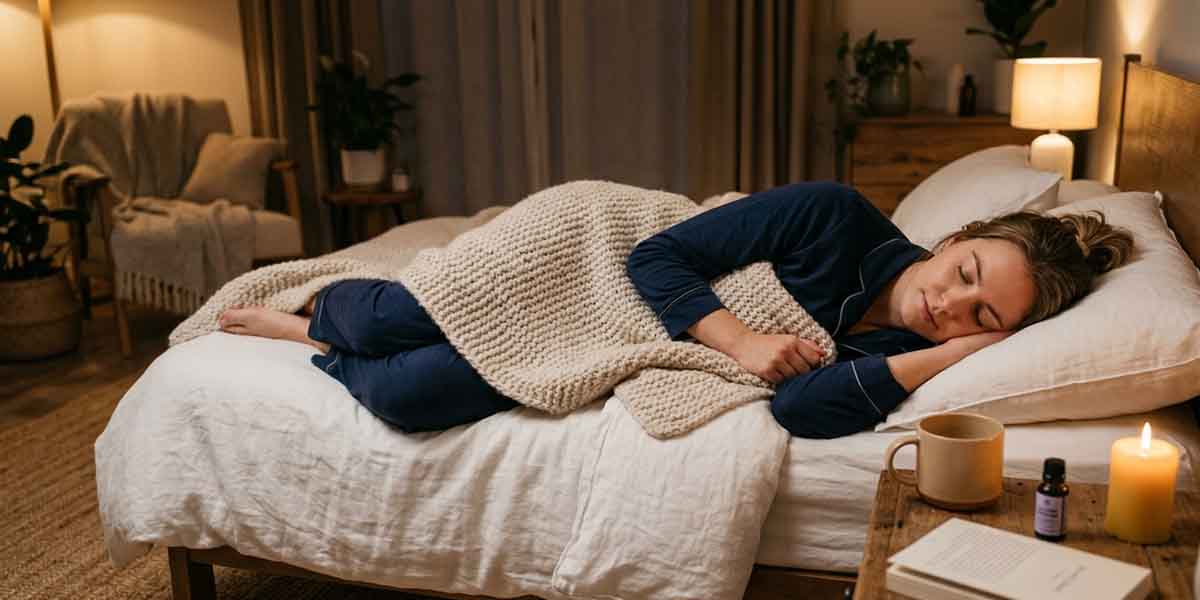
There is a particular kind of exhaustion that comes not from working too hard, but from lying awake when you desperately want to sleep. You know the feeling — the ceiling stares back at you, your mind refuses to slow down, and every hour that passes feels like a quiet catastrophe. You are far from alone in this. Millions of people struggle with the quality and quantity of their sleep every single night.
But here is the truth that most people overlook: deep, restorative sleep is not something that just happens to lucky people. It is something you can actively build, night by night, through the right routines and habits. This article walks you through science-backed, real-world techniques for creating a consistent deep sleep routine and discovering the relaxation hacks that actually work.
Why Deep Sleep Matters More Than You Think
Not all sleep is created equal. When you close your eyes at night, your body cycles through several stages — light sleep, REM sleep, and deep sleep (also called slow-wave sleep or N3). Deep sleep is the stage where the real magic happens.
During deep sleep, your body repairs tissues, strengthens the immune system, consolidates memories, and releases growth hormone. Your brain essentially cleans itself — flushing out metabolic waste products that accumulate throughout the day. Chronic lack of deep sleep has been linked to increased risk of Alzheimer’s disease, heart conditions, obesity, diabetes, and a host of mental health challenges.
In short, skimping on deep sleep is not just about feeling groggy the next morning. It is about the long-term health of your brain and body. The good news? You have far more control over how much deep sleep you get than you probably realize.
Building Your Pre-Sleep Routine: The One Hour That Changes Everything
The hour before you go to bed is the most important hour of your day when it comes to sleep quality. What you do (and don’t do) during this window sets the stage for everything that follows. Think of it less as winding down and more as a deliberate transition — signaling to your nervous system that it is time to shift gears.
Step Away from Screens — For Real This Time
This advice has been repeated so often that most people have gone numb to it. But the science remains stubbornly compelling. The blue light emitted by phones, tablets, laptops, and televisions suppresses melatonin production — the hormone your body uses to prepare for sleep. Even dimly lit screens can delay your sleep cycle by 30 minutes to two hours.
Try putting your phone in another room at least 45 minutes before bed. If that feels impossible, use a blue light filter (most smartphones now have a “night mode” setting) and keep the brightness low. Better still, replace the screen habit with something tactile — a physical book, a crossword puzzle, or a conversation with someone in the same room.
Keep a Consistent Sleep Schedule
Your body runs on an internal clock called the circadian rhythm. When you go to bed at wildly different times each night — 10 PM on Tuesday, 1 AM on Friday, noon on Sunday — you are essentially giving your body jet lag without leaving the country. The inconsistency makes it much harder to fall asleep and reach those deeper sleep stages.
Pick a bedtime and wake time and stick to them — even on weekends. Yes, even on weekends. This single change, done consistently over two to three weeks, often produces more noticeable improvements in sleep quality than any supplement or gadget on the market.
A Warm Bath or Shower Works Wonders
Taking a warm bath or shower about 90 minutes before bed is one of the most underrated sleep hacks around. Here is why it works: the warm water raises your body temperature slightly, and then as you get out and cool down, your core temperature drops. That drop in body temperature is one of the key biological triggers for deep sleep.
You do not need anything elaborate — a 10-minute warm shower does the job. Add some Epsom salts or a few drops of lavender essential oil to a bath if you want to amplify the relaxation effect.
The Bedroom Environment: Small Changes, Big Results
Your bedroom should function as a sanctuary for sleep. If it currently doubles as a home office, a place where you scroll through social media, or a room flooded with street light, it is working against you.
Get the Temperature Right
Most sleep researchers point to a room temperature between 60 and 67 degrees Fahrenheit (15 to 19 degrees Celsius) as the sweet spot for deep sleep. A cooler room supports the drop in core body temperature needed to enter and sustain deep sleep stages.
If you cannot control your thermostat or if you share a bed with someone who runs warm while you run cold, consider a cooling mattress pad, breathable cotton or bamboo bedding, or even a small fan pointed away from the bed to circulate air without blowing directly on you.
Darkness Is Non-Negotiable
Even small amounts of light during sleep — a streetlamp peeking through thin curtains, the glow of a charging indicator, the standby light on a television — can interfere with melatonin production and disrupt sleep cycles. Blackout curtains are one of the best investments you can make in your sleep.
If blackout curtains are not an option, a sleep mask works beautifully. It takes a night or two to get used to, and then most people wonder how they ever slept without one.
Manage Noise — Or Use It to Your Advantage
Silence is not always the best sleeping environment. For many people, complete silence actually amplifies the sounds that do exist — a creak, a neighbor’s television, traffic — making them more disruptive. White noise, brown noise, or pink noise can mask these interruptions by creating a consistent audio backdrop.
White noise sounds like static. Brown noise is lower and richer — many people describe it as rain or wind. Pink noise falls somewhere between the two and has shown some promising results in sleep research for potentially increasing the time spent in deep sleep. Experiment and see what your brain responds to.
Night Relaxation Hacks That Actually Deliver
Beyond setting up the right environment, there are specific techniques you can use in the moments before and after you get into bed to dial down your nervous system and make deep sleep more accessible.
The 4-7-8 Breathing Method
Developed by Dr. Andrew Weil, this breathing technique acts as a natural tranquilizer for the nervous system. Here is how it works:
- Exhale completely through your mouth, making a whoosh sound.
- Close your mouth and inhale quietly through your nose for 4 counts.
- Hold your breath for 7 counts.
- Exhale completely through your mouth for 8 counts.
- Repeat this cycle four times.
It sounds almost too simple. But holding the breath while building carbon dioxide in the bloodstream triggers the parasympathetic nervous system — your rest-and-digest mode. Many people report falling asleep faster than expected the first time they try this.
Progressive Muscle Relaxation
Progressive muscle relaxation (PMR) is a technique where you systematically tense and release muscle groups from your feet upward to your face. The act of consciously tensing a muscle and then letting it go teaches your body the difference between tension and release — and your nervous system takes notice.
Start with your feet. Curl your toes tightly for five seconds, then release. Work upward through your calves, thighs, abdomen, hands, arms, shoulders, neck, and face. By the time you reach the top of your head, most people feel noticeably heavier and calmer. It takes about 15 minutes and is particularly effective for people whose sleep problems stem from physical tension or stress carried in the body.
The Military Sleep Method
Originally developed to help soldiers fall asleep in two minutes under any conditions, this method has been gaining traction outside military circles. The technique combines physical relaxation with mental visualization:
- Relax your face completely, including your tongue, jaw, and the muscles around your eyes.
- Drop your shoulders as low as they will go, then relax your upper and lower arms one side at a time.
- Exhale and relax your chest, then your legs from thighs down to feet.
- Clear your mind for 10 seconds by picturing a calm, peaceful scene — a still lake, a dark room, a hammock in a gentle breeze. If thoughts intrude, repeat the phrase “don’t think” for 10 seconds.
Practitioners report that after six weeks of consistent practice, this method works roughly 96% of the time.
Journaling to Empty Your Mind
One of the most common reasons people lie awake is mental rumination — replaying the day’s events, worrying about tomorrow, running through to-do lists. The mind, it turns out, hates unfinished business.
A 2018 study published in the Journal of Experimental Psychology found that spending just five minutes before bed writing a concrete to-do list for the next day — not journaling about the day, but writing down tomorrow’s tasks — helped participants fall asleep significantly faster. The act of writing seems to “offload” the mental holding pattern, giving the brain permission to let go.
Keep a small notebook and pen on your nightstand. Write down what is rattling around in your head. You do not need to solve anything. Just get it out of your brain and onto the page.
What You Eat and Drink: The Sleep-Diet Connection
The relationship between food, drink, and sleep quality is more direct than most people appreciate. What you consume in the hours before bed can either support or seriously undermine your body’s ability to drop into deep sleep.
Avoid Caffeine After 2 PM
Caffeine has a half-life of roughly five to seven hours in most adults. That means a coffee at 3 PM still has half its stimulant effect active at 8 or 9 PM. For light sleepers or those sensitive to caffeine, even a midday cup can reduce deep sleep time by measurable amounts without the person even realizing it.
Remember that caffeine hides in places beyond coffee — tea, certain soft drinks, chocolate, and even some medications. If you are struggling with sleep, a good first experiment is cutting caffeine off entirely after 12 noon for two weeks and observing what changes.
Skip the Nightcap
Alcohol is the world’s most widely used sleep aid, and one of the most counterproductive ones. While alcohol does help you fall asleep faster — it is a sedative, after all — it dramatically disrupts sleep architecture in the second half of the night. It suppresses REM sleep, causes fragmented sleep, and tends to wake people up in the early morning hours.
If you enjoy a drink in the evenings, try to have it with dinner rather than immediately before bed, and keep it to one standard drink. Your sleep quality in the second half of the night will be noticeably better for it.
Sleep-Supportive Foods and Drinks
Certain foods contain compounds that naturally support melatonin production, relaxation, and sleep quality. Tart cherry juice is one of the most well-researched — it is one of the few natural food sources of melatonin and has been shown in multiple small studies to improve sleep duration and quality.
Kiwi fruit has also produced interesting results in sleep research — eating two kiwis an hour before bed over a four-week period led to measurable improvements in sleep onset and duration in one study. Bananas, warm milk, almonds, and oatmeal all contain magnesium and tryptophan — both of which support the serotonin and melatonin pathways involved in sleep.
Chamomile tea is the classic bedtime choice for good reason. It contains apigenin, an antioxidant that binds to certain receptors in the brain and promotes relaxation. A warm cup 30 to 45 minutes before bed is a low-effort, pleasant habit worth building.
Movement, Mindfulness, and Melatonin: The Supporting Cast
Exercise — But Get the Timing Right
Regular physical exercise is one of the most powerful tools for improving deep sleep. People who exercise consistently spend more time in slow-wave sleep and report better overall sleep quality. Even moderate activity — a 30-minute walk five days a week — produces measurable benefits.
The one caveat is timing. High-intensity exercise within two to three hours of bedtime can elevate core body temperature, heart rate, and cortisol levels — all of which can make it harder to fall asleep. Morning or early afternoon exercise is ideal. If evenings are your only option, opt for lighter activities like yoga, stretching, or a gentle walk.
Meditation and Mindfulness Practices
A regular meditation practice changes the brain in ways that are directly relevant to sleep. Research shows that mindfulness meditation reduces activity in the default mode network — the part of the brain responsible for mind-wandering and rumination — which is precisely what keeps so many people awake at night.
You do not need to meditate for an hour to see benefits. Even 10 minutes of focused breathing or body-scan meditation before bed can shift your nervous system out of fight-or-flight mode and into the calmer parasympathetic state more conducive to sleep. Apps like Insight Timer offer guided sleep meditations that work well for beginners.
Melatonin Supplements: A Tool, Not a Solution
Melatonin supplements are among the most widely used sleep aids in the world, and they are frequently misused. Melatonin is not a sedative — it does not knock you out. It is a timing signal that tells your body it is nighttime and that sleep should be approaching.
Most people take far too much of it. Research suggests that doses between 0.5 mg and 1 mg, taken about 30 to 60 minutes before desired sleep, are often sufficient and more effective than the 5 mg or 10 mg doses commonly sold over the counter. Low doses also minimize the grogginess some people experience the next morning.
Melatonin is particularly useful for resetting the sleep clock after jet lag or shift work. For everyday sleep improvement, the behavioral and environmental changes discussed throughout this article will tend to produce more lasting results.
The Two-Week Deep Sleep Challenge
Knowledge without action is just entertainment. If you have read this far, here is a practical challenge: commit to two weeks of deliberate sleep improvements and track what happens.
Week One — Foundation:
- Set a consistent bedtime and wake time and stick to it every day, including weekends.
- Put your phone in another room 45 minutes before bed.
- Take a warm shower 90 minutes before sleeping.
- Write a brief to-do list for the next day before getting into bed.
Week Two — Enhancement:
- Add the 4-7-8 breathing method or progressive muscle relaxation to your nightly routine.
- Cut caffeine off after 2 PM.
- Ensure your bedroom is dark, cool, and quiet.
- Add a 10-minute body-scan meditation or light stretching session before bed.
Do not try to implement everything at once. Sleep improvements are cumulative and gradual. Small, consistent changes compound over time in ways that dramatic overnight overhauls rarely do.
Final Thoughts: Sleep Is Not a Luxury
There is a persistent cultural myth that sleeping less and pushing harder is a sign of dedication or ambition. The evidence says otherwise. Chronic sleep deprivation impairs judgment, creativity, emotional regulation, and physical performance in ways that accumulate invisibly until something gives way.
Prioritizing sleep is not a form of laziness. It is one of the most rational investments you can make in your health, your work, and your relationships. The routines and hacks outlined in this article are not complicated, and they do not require buying anything special or overhauling your entire life.
They require consistency. They require treating your sleep with the same seriousness you bring to your diet or your exercise. And over time, they can fundamentally change how rested, sharp, and well you feel — not just in the morning, but throughout every hour of your day.
The ceiling will still be there tomorrow. But tonight, with the right routine in place, you might not have to stare at it for long.